Which mop for which floor: a sorting method
People shop for a mop by the mop. The floor is the better place to start, because the floor decides how much water you are allowed to leave behind, and water tolerance is the real difference between our designs.
Laminate and engineered wood: barely damp
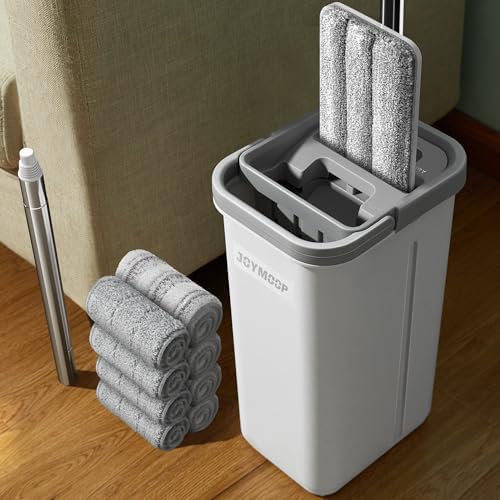
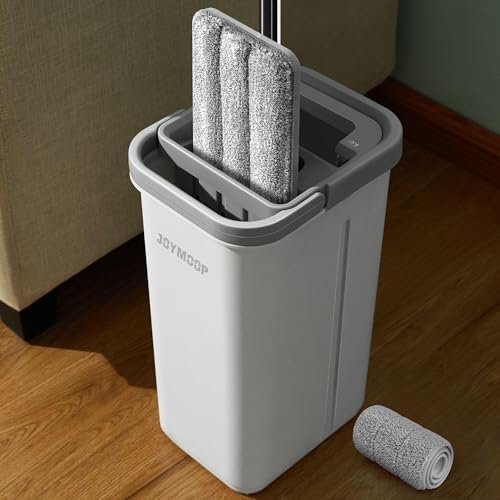
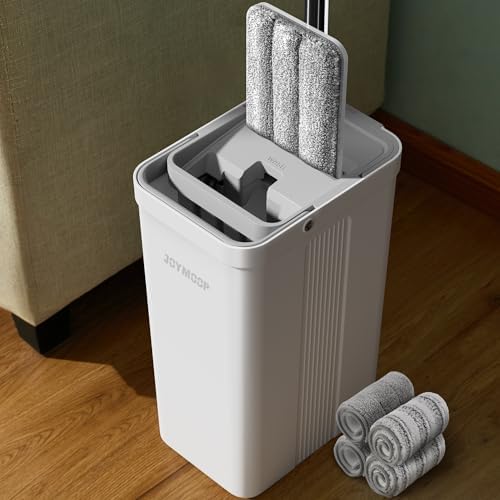
Laminate swells at the seams if water sits on it, and a swollen seam does not go back down. This is flat mop territory. A microfiber pad wrung to barely damp carries enough moisture to lift grime and dries behind you in a minute or two. If your bucket has a drying chamber, use it twice; the second press is the one that matters on laminate.
Sealed hardwood: damp, moving fast
Sealed wood takes a damp pad without complaint as long as nothing pools. A spray mop earns its keep here because you meter the water yourself, a mist at a time, and mist does not pool. Work along the boards, not across them, so anything the pad misses sits on top of a seam instead of inside it.
Tile and vinyl: the forgiving ones
Tile shrugs at water, which is why the classic spin mop and bucket still runs the bathrooms and kitchens of the world. The round head reaches into the low spots of textured tile that a flat pad bridges over, and the wringer basket lets you run the mop wetter for a sticky floor, then drier for the final pass.
The mixed apartment
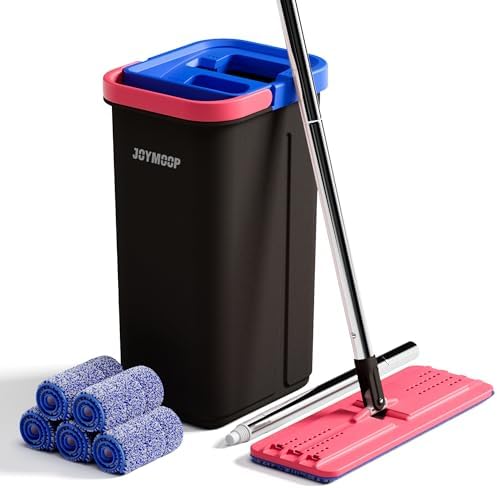
Most homes are not one floor but three or four. Our advice is one flat mop set as the daily driver, wrung drier or wetter by room, with a spin mop in reserve if you have a lot of textured tile. What does not work is one soaking-wet string mop for everything; the tile will forgive it and the laminate will not.